
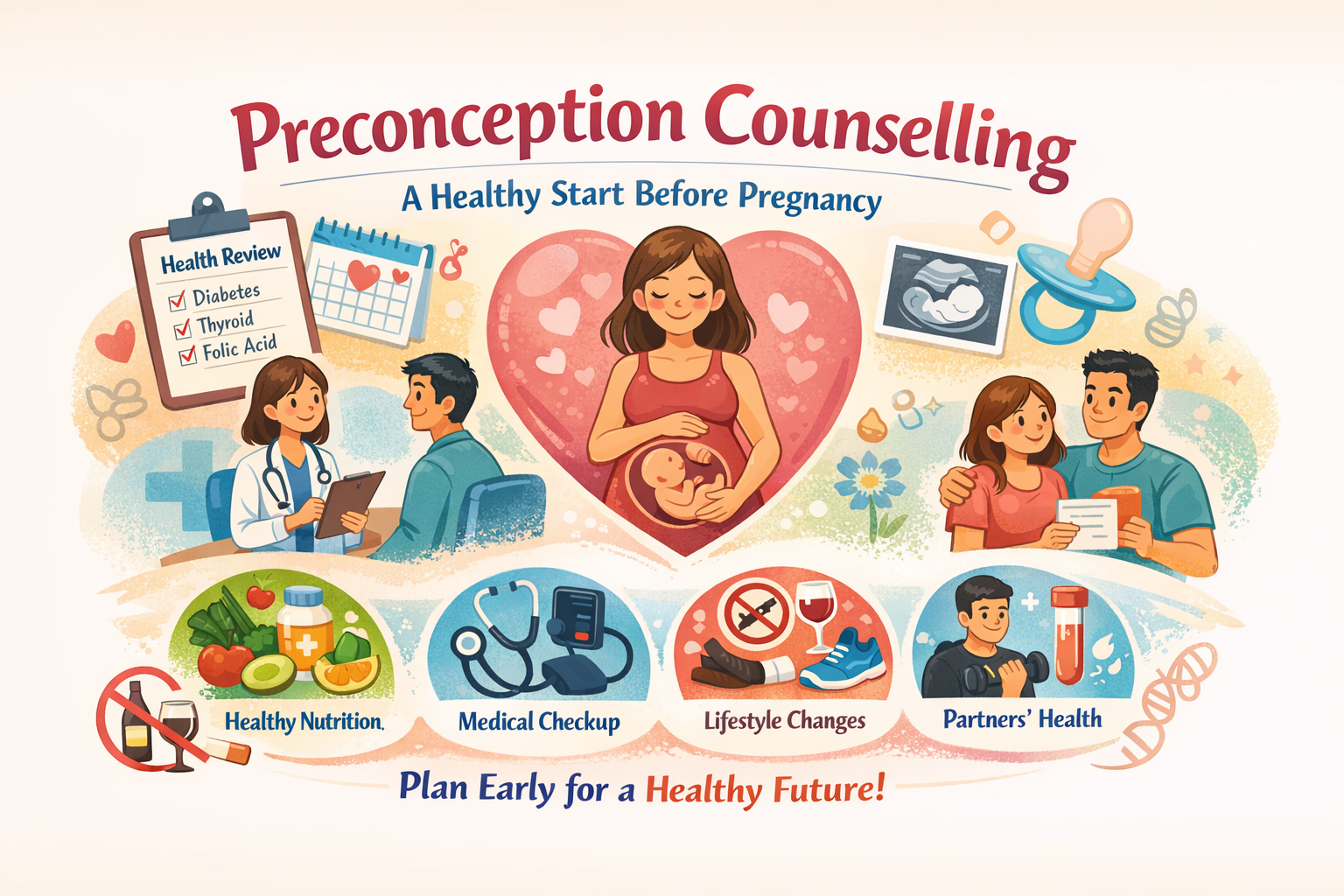
What is Preconception Counselling?
Preconception counselling is the care and guidance provided to individuals or couples before pregnancy to ensure the best possible outcomes for both mother and baby. Instead of waiting until pregnancy begins, this preventive approach focuses on improving health, identifying risks, and making necessary lifestyle and medical adjustments in advance. The World Health Organization emphasizes that preconception care is a key strategy to reduce maternal and newborn illness and improve long-term health outcomes.
Many women enter pregnancy with untreated medical conditions, nutritional deficiencies, incomplete vaccinations, or unhealthy lifestyle habits. These factors can increase the risk of miscarriage, birth defects, preterm birth, low birth weight, gestational diabetes, hypertensive disorders, and maternal complications. Preconception counselling allows healthcare providers to address these concerns early — ideally before fetal development begins — significantly improving pregnancy outcomes.
The American College of Obstetricians and Gynecologists recommends that prepregnancy counselling be a routine part of reproductive healthcare. Optimizing chronic conditions such as diabetes, thyroid disorders, hypertension, and epilepsy before conception reduces complications and improves fetal safety. Reviewing medications is equally important, as some drugs can harm fetal development and may need safer alternatives.
Good nutrition is another cornerstone of preconception care. Folic acid supplementation before conception significantly reduces neural tube defects, while adequate iron, iodine, vitamin D, and balanced nutrition support healthy fetal growth and brain development. The Centers for Disease Control and Prevention highlights folic acid use, vaccination updates, chronic disease control, and avoidance of tobacco and alcohol as essential steps to improve reproductive outcomes.
Lifestyle and psychosocial factors also play a crucial role. Smoking, alcohol consumption, obesity, stress, and exposure to environmental toxins can negatively affect fertility and pregnancy outcomes. The National Institute for Health and Care Excellence recommends weight optimization, mental health assessment, and healthy lifestyle practices before conception.
In the Indian context, preconception counselling is particularly important due to the high prevalence of anemia, nutritional deficiencies, thalassemia traits, thyroid disorders, and metabolic conditions. The Federation of Obstetric and Gynaecological Societies of India emphasizes anemia prevention, nutritional optimization, thalassemia screening, and vaccination awareness as essential components of prepregnancy care.
Preconception counselling is not limited to women alone. Male partner health — including smoking, alcohol use, metabolic health, and infection screening — can influence fertility and pregnancy outcomes. A couple-centered approach promotes shared responsibility and improves reproductive success.
Ultimately, preconception counselling represents a shift from reactive care to preventive reproductive health. By improving health before conception, addressing modifiable risks, and empowering couples with knowledge, healthcare providers can help ensure safer pregnancies, healthier babies, and stronger families.
Who Should Receive Preconception Counselling?
Preconception counselling is beneficial for all individuals of reproductive age, regardless of whether pregnancy is planned immediately or in the future. Major authorities recommend integrating preconception care into routine healthcare to improve maternal and neonatal outcomes. While every woman can benefit, certain groups particularly require targeted counselling due to higher risks.
1) All Women of Reproductive Age
Preconception counselling should be offered opportunistically during routine healthcare visits.
Why important?
- Nearly half of pregnancies are unplanned
- Early risk identification improves outcomes
- Promotes healthy lifestyle and reproductive planning
2) Couples Planning Pregnancy
Couples intending to conceive within the next year should seek counselling ideally at least 3 to 6 months before trying.
Focus areas
- Timing of conception & fertility awareness
- Folic acid supplementation
- Vaccination status
- Lifestyle optimization
3) Women with Chronic Medical Conditions
Women with pre-existing medical disorders require careful optimization before conception.
Examples include:
- Diabetes mellitus
- Hypertension
- Thyroid disorders
- Epilepsy
- Cardiac disease
- Renal disease
- Autoimmune disorders (e.g., SLE, APS)
- Psychiatric illness
The American College of Obstetricians and Gynecologists emphasizes disease control prior to conception to reduce maternal and fetal complications.
4) Women Taking Long-Term or Potentially Teratogenic Medications
Counselling is essential to review medication safety and substitute harmful drugs.
Examples
- Antiepileptic drugs
- Isotretinoin
- ACE inhibitors / ARBs
- Warfarin
- Methotrexate
5) Women with Previous Adverse Pregnancy Outcomes
Preconception evaluation helps identify preventable causes and reduce recurrence risk.
Indications include:
- Recurrent miscarriages
- Stillbirth
- Preterm birth
- Fetal growth restriction
- Congenital anomalies
- Severe preeclampsia
6) Women with Infertility or Subfertility
Women trying to conceive unsuccessfully should undergo counselling.
Includes
- PCOS & anovulation
- Endometriosis
- Tubal factors
- Ovulatory disorders
Lifestyle modification and metabolic optimization can improve fertility outcomes.
7) Women with Nutritional Risks or Anemia
Risk groups
- Anemia
- Vegetarian diets with B12 deficiency
- Undernutrition
- Obesity
The Federation of Obstetric and Gynaecological Societies of India highlights anemia prevention and nutritional optimization as essential prepregnancy interventions.
8) Women with Genetic Risk Factors
Preconception counselling is recommended when there is:
- Family history of genetic disorders
- Thalassemia trait risk (common in India)
- Congenital anomalies in prior child
- Consanguineous marriage
Carrier screening enables informed reproductive decisions.
9) Women with Lifestyle Risk Factors
Counselling is essential for those with:
- Tobacco use
- Alcohol intake
- Substance abuse
- Obesity or sedentary lifestyle
- Occupational toxin exposure
The National Institute for Health and Care Excellence recommends lifestyle modification to improve fertility and pregnancy outcomes.
10) Adolescents and Advanced Maternal Age Women
Adolescents
- Nutritional deficiencies
- Higher anemia risk
- Psychosocial vulnerabilities
Advanced maternal age (>35 years)
- Reduced fertility
- Increased risk of aneuploidy
- Pregnancy complications
11) Women with Incomplete Immunization or Infection Risk
Counselling is important for those lacking immunity to:
- Rubella
- Varicella
- Hepatitis B
- High STI risk
Vaccination before conception prevents congenital infections.
12) Male Partner Involvement (Often Overlooked)
Preconception counselling should also include male partners.
Focus areas
- Smoking & alcohol use
- Metabolic health & obesity
- STI screening
- Occupational exposures
- Sperm health
Key Message
Preconception counselling should be considered universal, but it is especially crucial for individuals with medical, genetic, lifestyle, or reproductive risk factors. Early counselling allows risk modification, improves fertility, prevents complications, and supports healthier pregnancies.
Goals of Preconception Care
The primary aim of preconception care is to ensure that individuals enter pregnancy in the best possible physical, nutritional, and psychological health. Major health authorities emphasize that preconception care is a preventive strategy designed to reduce maternal and neonatal complications while promoting healthy pregnancies and long-term wellbeing.
Below are the core goals supported by international and national guidelines.
1) Optimize Maternal Health Before Pregnancy
The foremost goal is to ensure that women are medically fit before conception.
Includes:
- Control of diabetes, hypertension, thyroid disorders
- Management of epilepsy, cardiac disease, asthma, autoimmune disorders
- Correction of anemia and nutritional deficiencies
2) Identify and Modify Risk Factors
Preconception care aims to detect biomedical, behavioral, and social risks that may affect pregnancy.
Examples:
- Obesity or undernutrition
- Smoking, alcohol, substance use
- Environmental toxin exposure
- Occupational hazards
- Intimate partner violence
3) Prevent Congenital Anomalies
Preventing birth defects is a major objective.
Strategies include:
- Folic acid supplementation before conception
- Glycemic control in diabetes
- Avoidance of teratogenic medications
- Vaccination against rubella & varicella
- Genetic counselling when indicated
Adequate folic acid intake before conception significantly reduces neural tube defects.
4) Improve Fertility and Reproductive Outcomes
Preconception care supports optimal fertility and reduces time to conception.
Includes:
- Ovulation and fertility awareness
- Weight management
- Metabolic optimization in PCOS
- Evaluation of infertility risk factors
Healthy lifestyle changes improve ovulatory function and reproductive success.
5) Promote Healthy Fetal Growth and Development
Optimizing maternal nutrition and health ensures proper fetal growth.
Focus areas:
- Iron and iodine sufficiency
- Vitamin D and B12 adequacy
- Balanced protein and micronutrient intake
6) Ensure Safe Medication Use
Reviewing medications before conception prevents fetal harm.
Goals include:
- Discontinuing teratogenic drugs
- Switching to pregnancy-safe alternatives
- Adjusting dosages when needed
7) Update Immunization and Prevent Infections
Preventing maternal infections reduces congenital and neonatal complications.
Key actions:
- Confirm immunity to rubella & varicella
- Hepatitis B vaccination if needed
- Screen & treat STIs
- Prevent perinatal infections
8) Improve Maternal Mental Health and Psychosocial Wellbeing
Preconception care aims to ensure psychological readiness for pregnancy.
Includes screening for:
- Depression and anxiety
- Stress and burnout
- Domestic violence
- Social support systems
Mental wellbeing improves maternal health and infant bonding.
9) Encourage Healthy Lifestyle Behaviors
Promoting healthy habits improves pregnancy outcomes.
Includes:
- Healthy weight maintenance
- Regular physical activity
- Adequate sleep
- Cessation of tobacco, alcohol, and drugs
- Limiting caffeine intake
10) Promote Couple-Centered Reproductive Planning
Preconception care encourages shared responsibility.
Includes:
- Male partner health optimization
- Genetic counselling for couples
- STI screening
- Reproductive life planning
11) Reduce Maternal and Neonatal Morbidity and Mortality
Ultimately, preconception care aims to improve population health outcomes by reducing:
- Maternal complications
- Preterm birth
- Low birth weight
- Congenital anomalies
- Neonatal mortality
Preconception care focuses on prevention, preparation, and optimization. By addressing health risks before pregnancy begins, it enhances fertility, prevents complications, and promotes healthy mothers and babies.
Comprehensive Risk Assessment in Preconception Counselling
A thorough risk assessment is the cornerstone of preconception care. It helps identify medical, genetic, lifestyle, and environmental factors that may affect fertility, pregnancy progression, fetal development, and maternal wellbeing. Below are the key components of a comprehensive risk assessment.
1) Detailed Medical History
Identifying pre-existing medical conditions allows optimization before pregnancy.
Conditions to screen for:
- Diabetes mellitus
- Hypertension
- Thyroid disorders
- Epilepsy
- Bronchial asthma
- Cardiac disease
- Renal disease
- Autoimmune disorders (SLE, APS)
- Psychiatric illness
Poorly controlled chronic disease increases risk of miscarriage, congenital anomalies, preeclampsia, and preterm birth.
2) Obstetric and Gynecologic History
Previous reproductive outcomes help predict future pregnancy risks.
Assess:
- Previous miscarriages or recurrent pregnancy loss
- Preterm birth or stillbirth
- Previous congenital anomalies
- Hypertensive disorders or GDM
- Mode of previous deliveries (LSCS, operative delivery)
- Postpartum complications
Gynecologic history
- Menstrual irregularities
- PCOS, endometriosis, fibroids
- Pelvic infections or surgeries
3) Surgical History
Past surgeries may influence pregnancy or delivery.
Important procedures:
- Previous cesarean sections
- Myomectomy
- Cervical procedures (LEEP, cone biopsy)
- Bariatric surgery
- Pelvic or abdominal surgeries
4) Medication and Teratogen Exposure Review
Certain medications and exposures can harm fetal development.
Evaluate use of:
- Antiepileptics (valproate)
- Isotretinoin
- Warfarin
- ACE inhibitors / ARBs
- Methotrexate
- Herbal or alternative medicines
- Radiation or chemotherapy exposure
Medication review enables switching to pregnancy-safe alternatives.
5) Family and Genetic History
Screening helps identify hereditary risks.
Assess for:
- Congenital anomalies in family
- Genetic disorders
- Thalassemia and hemoglobinopathies
- Chromosomal abnormalities
- Consanguinity
Carrier screening is especially relevant in high-prevalence populations.
6) Nutritional and Hematologic Assessment
Nutritional deficiencies are common and affect pregnancy outcomes.
Evaluate:
- Anemia
- Iron deficiency
- Vitamin B12 deficiency (common in vegetarians)
- Vitamin D deficiency
- Iodine intake
- Undernutrition or obesity
7) Lifestyle and Behavioral Risk Assessment
Lifestyle factors significantly influence fertility and pregnancy health.
Assess:
- Tobacco use
- Alcohol intake
- Substance abuse
- Physical inactivity
- Poor sleep habits
- High stress levels
8) Environmental and Occupational Exposure
Exposure to harmful agents can affect fertility and fetal development.
Evaluate exposure to:
- Pesticides and chemicals
- Heavy metals (lead, mercury)
- Radiation
- Industrial toxins
- Anesthetic gases
- Prolonged standing or physical strain
9) Infection Risk Assessment
Certain infections can adversely affect pregnancy and fetal health.
Screen risk for:
- Rubella & varicella susceptibility
- Hepatitis B & C
- HIV
- Syphilis
- Tuberculosis
- Sexually transmitted infections
Vaccination and treatment prior to conception reduce congenital infections.
10) Psychosocial and Mental Health Assessment
Mental and social wellbeing influences pregnancy outcomes.
Screen for:
- Depression and anxiety
- Stress and burnout
- Domestic violence
- Lack of social support
- Financial instability
11) Partner Assessment
A couple-based approach improves reproductive outcomes.
Assess male partner:
- Smoking & alcohol use
- Occupational exposures
- STI risk
- Chronic illnesses
- Fertility concerns
Male health impacts sperm quality and embryo health.
Comprehensive risk assessment allows healthcare providers to identify, modify, and manage risks before conception, transforming pregnancy care from reactive treatment to preventive health planning.
Lifestyle & Behavioral Assessment
Lifestyle factors strongly influence fertility, pregnancy outcomes, and fetal development.
Assess:
- Tobacco use (active & passive)
- Alcohol intake
- Substance abuse
- Physical inactivity
- Sleep deprivation
- Chronic stress
- Caffeine intake (>200 mg/day)
Why important?
Smoking, alcohol, and substance use are associated with infertility, miscarriage, fetal growth restriction, and congenital anomalies. Lifestyle modification before conception improves reproductive outcomes.
Nutritional Optimization Before Pregnancy
Optimal nutrition is essential for fetal organ development and maternal health.
Key recommendations:
- Folic acid: ≥400 mcg/day (5 mg in high-risk women)
- Iron: prevent anemia
- Calcium: 1000–1200 mg/day
- Vitamin D & B12: especially vegetarians
- Iodine: crucial for fetal brain development
- Adequate protein intake
Folic acid supplementation prior to conception reduces neural tube defects.
Weight Optimization & Physical Fitness
Achieving a healthy BMI improves fertility and reduces pregnancy complications.
BMI goals:
- Normal: 18.5–24.9 kg/m2
-
Obesity increases risk of:
- Gestational diabetes
- Preeclampsia
- Cesarean delivery
- Stillbirth
- Underweight linked to preterm birth and low birth weight
Exercise guidance:
- ≥150 minutes moderate activity/week
- Include strength & flexibility training
Screening & Laboratory Evaluation
Laboratory screening identifies correctable conditions before conception.
Routine tests:
- CBC (anemia screening)
- Blood group & Rh typing
- Blood sugar / HbA1c
- Thyroid function tests
- Urine routine examination
- STI screening (HIV, syphilis, hepatitis B)
Additional tests (if indicated):
- Thalassemia screening
- AMH & fertility markers
- Lipid profile
- Vitamin D & B12 levels
Early detection improves maternal and fetal outcomes.
Immunization Status Review
Ensuring immunity prevents congenital infections.
Vaccines to review:
- Rubella
- Varicella
- Hepatitis B
- Tdap
- Influenza
Live vaccines should be administered at least 1 month before conception.
Genetic Counselling & Carrier Screening
Genetic risk assessment allows informed reproductive decisions.
Indications:
- Family history of genetic disorders
- Previous child with congenital anomaly
- Recurrent pregnancy loss
- Consanguineous marriage
- High-risk ethnic groups
- Thalassemia screening (important in India)
Carrier screening reduces risk of inherited disorders.
Management of Chronic Medical Conditions
Optimizing chronic diseases before conception reduces maternal and fetal risks.
Key conditions:
- Diabetes → maintain optimal HbA1c
- Thyroid disorders → euthyroid state
- Hypertension → pregnancy-safe medications
- Epilepsy → medication adjustment
- Cardiac disease → pre-pregnancy risk assessment
- Psychiatric illness → medication & stability review
Uncontrolled disease increases risk of adverse pregnancy outcomes.
Reproductive Life Planning & Fertility Counselling
Helps couples plan pregnancy at the healthiest time.
Includes:
- Understanding fertile window
- Ovulation tracking
- Ideal interpregnancy interval (≥18–24 months)
- When to seek infertility evaluation
- Age-related fertility decline education
Fertility awareness improves conception success.
Environmental & Occupational Risk Reduction
Environmental toxins can affect fertility and fetal development.
Assess exposure to:
- Pesticides & solvents
- Heavy metals (lead, mercury)
- Radiation
- Anesthetic gases
- Industrial chemicals
Reducing exposure lowers risk of congenital anomalies and miscarriage.
Mental Health & Psychosocial Screening
Psychological wellbeing is essential for healthy pregnancy outcomes.
Screen for:
- Depression & anxiety
- Chronic stress
- Domestic violence
- Social support
- Financial instability
Psychosocial stress is linked to preterm birth and poor maternal health.
Counselling for Special Situations
Certain groups require individualized counselling.
Includes:
- PCOS & metabolic syndrome
- Recurrent pregnancy loss
- Advanced maternal age
- Obesity
- Bariatric surgery patients
- Teratogenic drug exposure
- Autoimmune disorders
Individualized care improves pregnancy success.
Partner Involvement in Preconception Care
Male health influences fertility and pregnancy outcomes.
Male partner assessment:
- Smoking & alcohol use
- Obesity & metabolic health
- STI screening
- Occupational exposures
- Sperm health & fertility factors
A couple-centered approach improves reproductive success.
When to Schedule a Preconception Visit
Timing of counselling is important.
Recommended timing:
- Ideally 3 months before conception
- Earlier if chronic illness present
- Anytime reproductive planning begins
This allows adequate time for risk modification.
Key Takeaways for Patients
Simple preventive steps can significantly improve pregnancy outcomes:
- Start folic acid supplementation
- Achieve healthy weight
- Control medical conditions
- Stop tobacco & alcohol
- Update vaccinations
- Optimize nutrition
- Consult a doctor before trying to conceive
Building the Foundation for a Healthy Pregnancy
Preconception counselling represents a shift from reactive care to preventive reproductive health. By identifying risks early, optimizing health, and empowering couples with knowledge, healthcare providers can improve fertility, prevent complications, and ensure healthier mothers and babies. Strengthening awareness and integrating preconception care into routine healthcare can significantly improve maternal and neonatal outcomes at both individual and population levels.
Standard References
- World Health Organization. Preconception Care: Maximizing the Gains for Maternal and Child Health.
- American College of Obstetricians and Gynecologists. Prepregnancy Counseling.
- Centers for Disease Control and Prevention. Preconception Health Recommendations.
- National Institute for Health and Care Excellence. Prepregnancy advice.
- Federation of Obstetric and Gynaecological Societies of India. Good Clinical Practice Recommendations.
Lifestyle Management in the Indian Context
(Preconception Counselling Add-on Section)
Lifestyle modification is a critical component of preconception care. In India, specific cultural, dietary, occupational, and environmental factors influence reproductive health. Below is an India-specific approach to lifestyle management before conception.
1) Tobacco Use (Smoking & Smokeless Forms)
Indian relevance
- Cigarette and bidi smoking
- Hookah use
- Smokeless tobacco (gutkha, khaini, paan, zarda)
Risks
- Infertility & reduced ovarian reserve
- Miscarriage & ectopic pregnancy
- Fetal growth restriction & low birth weight
- Placental complications
Counselling advice
- Complete cessation before conception
- Avoid passive smoke exposure
- Behavioral support & cessation programs
2) Alcohol & Substance Use
Indian considerations
- Social drinking increasing among urban women
- Unregulated herbal/illicit substances
Risks
- Fetal alcohol spectrum disorders
- Infertility & ovulatory dysfunction
- Miscarriage risk
Advice
- Avoid alcohol when planning pregnancy
- Discontinue recreational drug use
3) Nutrition & Dietary Practices in India
Common issues
- Iron deficiency anemia
- Vitamin B12 deficiency (vegetarian diets)
- Low protein intake
- High carbohydrate & refined sugar intake
- Excess trans fats & fried foods
Lifestyle guidance
- Include iron-rich foods (green leafy vegetables, jaggery, legumes)
- Ensure protein intake (dal, paneer, curd, eggs, soy, nuts)
- Vitamin B12 sources or supplements (especially vegetarians)
- Reduce processed & fried foods
- Use iodized salt
4) Weight Management & Physical Activity
Indian scenario
- Rising obesity in urban women
- Sedentary lifestyle due to desk jobs
- Central obesity & insulin resistance (especially in PCOS)
Risks
- Infertility & ovulatory dysfunction
- Gestational diabetes
- Hypertensive disorders
- Cesarean delivery
Recommendations
- Aim for BMI <25 kg/m2
- 150 minutes/week moderate exercise
- Walking, yoga, cycling, swimming
- Strength training for insulin sensitivity
5) Caffeine Intake
Sources in India
- Tea & chai
- Coffee
- Energy drinks
- Cola beverages
Recommendation
- Limit caffeine to <200 mg/day
- Avoid excessive tea/coffee intake
High caffeine intake is linked to miscarriage risk.
6) Sleep & Stress Management
Common stressors
- Work-life imbalance
- Academic/professional pressure
- Family & social expectations
- Infertility-related stress
Risks
- Hormonal imbalance
- Ovulatory dysfunction
- Mental health issues
Advice
- 7–8 hours of sleep daily
- Meditation & mindfulness
- Yoga & breathing exercises
- Stress counselling if needed
7) Occupational & Environmental Exposure
Indian risk groups
- Healthcare workers (radiation, anesthetic gases)
- Agricultural workers (pesticides)
- Factory workers (chemicals, solvents)
- Beauty & salon professionals (chemical exposure)
Advice
- Use protective equipment
- Minimize toxin exposure
- Follow workplace safety protocols
8) Physical Activity & Traditional Practices
Encourage:
- Yoga & pranayama
- Regular walking
- Household physical activity
- Outdoor activity & sunlight exposure
Yoga improves stress control, hormonal balance, and metabolic health.
9) Cultural & Social Practices
Consider counselling on:
- Fasting practices & nutritional balance
- Early marriage & adolescent pregnancy risks
- Myths about diet & pregnancy preparation
- Stigma around infertility
Educating families improves compliance and maternal health.
10) Mental & Social Wellbeing in Indian Society
Key considerations:
- Joint family dynamics
- Societal pressure for early conception
- Gender bias stress
- Infertility stigma
Advice:
- Emotional support systems
- Couple communication
- Mental health screening when needed
In India, lifestyle counselling must address tobacco forms, nutritional deficiencies, obesity, occupational exposures, cultural practices, and psychosocial stressors. Tailoring advice to local realities improves fertility, reduces pregnancy complications, and promotes healthier maternal and neonatal outcomes.
References
- Federation of Obstetric and Gynaecological Societies of India. Good Clinical Practice Recommendations.
- Indian Council of Medical Research. Nutritional Guidelines for Indians.
- Ministry of Health and Family Welfare. Maternal Health & RMNCH+A Strategy.
- World Health Organization. Preconception Care Guidelines.
Summary
Preconception Care: Preparing for a Healthy Pregnancy
Definition:
Preconception care is the biomedical, behavioral, and social health interventions provided before conception to
improve maternal and fetal outcomes.
Who Should Receive Preconception Counselling?
- All women of reproductive age
- Women planning pregnancy
- History of infertility or miscarriage
- Chronic diseases (diabetes, hypertension, thyroid disorders)
- PCOS or obesity
- Previous adverse pregnancy outcome
- Genetic disorders in family
- Women on long-term medications
Goals of Preconception Care
- Optimize maternal health
- Reduce maternal & neonatal mortality
- Prevent congenital anomalies
- Identify and control chronic illnesses
- Promote healthy lifestyle habits
- Ensure nutritional adequacy
- Provide genetic & reproductive counselling
Core Components of Preconception Care
1) Risk Assessment
- Medical & surgical history
- Obstetric history
- Drug & allergy history
- Lifestyle habits
- Family & genetic history
2) Physical Examination
- BMI & nutritional status
- Blood pressure
- Thyroid & breast exam
- Pelvic assessment (if indicated)
3) Nutritional Optimization
- Folic acid 400–800 mcg daily
- Iron & calcium optimization
- Vitamin D supplementation
- Treat anemia before conception
4) Vaccination Review
- Rubella
- Hepatitis B
- Varicella
- Tdap
- Influenza (seasonal)
5) Chronic Disease Control
- Diabetes → HbA1c < 6.5%
- Thyroid disorders → optimize TSH
- Hypertension → safe medications
- Epilepsy → adjust teratogenic drugs
6) Genetic & Reproductive Counselling
Recommended if:
- Congenital anomalies in previous child
- Consanguinity
- Family history of genetic disease
- Thalassemia carrier risk
Lifestyle Management (Indian Context)
Diet
- Balanced diet (dal, whole grains, fruits, vegetables)
- Adequate protein intake
- Avoid processed & junk food
- Reduce excess sugar & refined carbs
ICMR-NIN Dietary Guidelines 2020
Physical Activity
- ≥150 minutes/week moderate exercise
- Yoga & pranayama beneficial
- Weight reduction if BMI > 25
WHO Physical Activity Guidelines; FOGSI
Avoid Harmful Substances
- Tobacco
- Alcohol
- Recreational drugs
- Excess caffeine (>200 mg/day)
Sleep & Stress Management
- 7–8 hours sleep
- Meditation & mindfulness
- Stress reduction improves fertility & hormonal balance
Medication Review
Avoid teratogenic drugs:
- Isotretinoin
- ACE inhibitors
- Warfarin
- Valproate
- Methotrexate
Benefits of Preconception Care
- Healthier mother
- Reduced birth defects
- Improved fertility outcomes
- Lower risk of pregnancy complications
- Better neonatal health
Key Message
A healthy pregnancy begins before conception. Early planning supports a healthier mother and a healthier baby.
References
- World Health Organization. Preconception care: maximizing the gains for maternal and child health. Geneva: WHO; 2013.
- Johnson K, Posner SF, Biermann J, et al. Recommendations to improve preconception health and health care — United States. MMWR Recomm Rep. 2006;55(RR-6):1-23.
- American College of Obstetricians and Gynecologists. Prepregnancy counseling. ACOG Committee Opinion No. 762. Obstet Gynecol. 2019;133(1):e78-e89.
- National Institute for Health and Care Excellence. Diabetes in pregnancy: management from preconception to the postnatal period (NG3). London: NICE; 2020 update.
- Centers for Disease Control and Prevention. Recommendations for preconception health and health care in the United States. Atlanta: CDC; 2006.
- Federation of Obstetric and Gynaecological Societies of India. FOGSI good clinical practice recommendations on preconception care. Mumbai: FOGSI; recent practice guidelines.
- Ministry of Health and Family Welfare. RMNCH+A Strategy & Maternal Health Guidelines. New Delhi: Government of India.
- Indian Council of Medical Research – National Institute of Nutrition. Nutrient Requirements for Indians. Hyderabad: ICMR-NIN; 2020.
- World Health Organization. WHO recommendations on antenatal care for a positive pregnancy experience. Geneva: WHO; 2016.
- March of Dimes. Folic acid and prevention of neural tube defects. White Plains, NY: March of Dimes Foundation.